


Short Overview
E20 petrol in India has become one of the most discussed fuel topics among vehicle owners. Many people are worried about mileage, engine damage, water use, insurance, and whether older vehicles can safely use ethanol-blended petrol. At the same time, the government says the E20 ethanol blending programme is scientifically tested, closely monitored, and important for India’s fuel security, farmer income, and cleaner mobility.
E20 petrol in India has created many questions among vehicle owners, especially about mileage, engine damage, water use, insurance, and environmental impact. This simple guide explains what E20 petrol means, why India is promoting ethanol blending, what the government has clarified, and how it may affect cars and two-wheelers. Learn the real facts behind common E20 petrol myths, including claims about engine corrosion, fuel efficiency, ants near fuel tanks, sugarcane juice mixing, water consumption, and warranty issues. The article also explains the benefits of ethanol blending, such as lower crude oil imports, farmer support, cleaner mobility, and reduced carbon emissions, in easy language for everyday readers.
What is E20 Petrol?
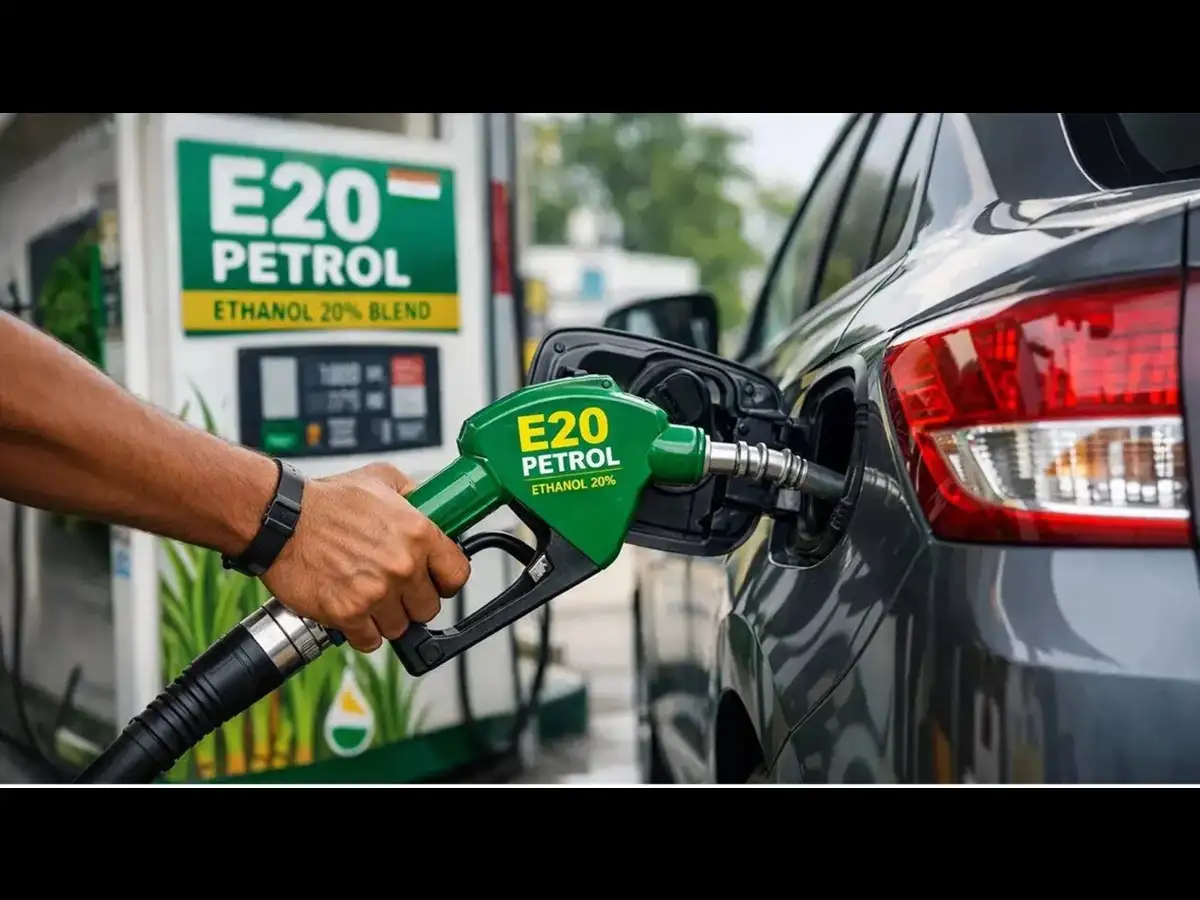
E20 petrol is a fuel blend made with 20% ethanol and 80% petrol. Ethanol is a biofuel that can be produced from sources such as sugarcane, molasses, broken rice, maize, and other agricultural feedstocks. In simple words, E20 petrol is not a completely new fuel. It is regular petrol blended with a higher percentage of ethanol.
India’s ethanol blending programme is not a sudden decision. According to the Ministry of Petroleum and Natural Gas, the Ethanol Blending Programme was launched in 2003 to reduce crude oil imports, improve energy security, and support environmental sustainability. The programme has been rolled out gradually with consultation among oil marketing companies, automobile manufacturers, testing agencies, and other stakeholders.
Why is India Promoting E20 Petrol?
India imports a large amount of crude oil. This makes fuel prices and energy security highly dependent on global oil markets. By blending ethanol with petrol, India can reduce some crude oil imports and use more domestically produced fuel. This also creates demand for agricultural products used in ethanol production.
The government has said that ethanol blending has helped save foreign exchange, reduce carbon emissions, substitute crude oil imports, and support farmers. PIB data from 2025 said the Ethanol Blended Petrol Programme had resulted in payments of more than ₹1.25 lakh crore to farmers, foreign exchange savings of more than ₹1.44 lakh crore, net CO2 reduction of about 736 lakh metric tonnes, and substitution of more than 244 lakh metric tonnes of crude oil up to July 2025.
This is why E20 petrol is being presented as more than just a fuel change. It is linked with energy independence, rural income, cleaner fuel, and India’s long-term mobility plans.
Why Are People Worried About E20 Fuel?
The concern around E20 petrol is understandable. For most people, a car or bike is not a small investment. When social media posts say that E20 petrol can damage engines, reduce mileage, attract insects, or void insurance, vehicle owners naturally become worried.
The government recently issued a clarification after several claims about E20 petrol started spreading online. These claims included engine damage, excessive water use, environmental harm, insurance issues, and even viral videos suggesting sugarcane juice was being mixed into petrol. The Ministry of Petroleum and Natural Gas rejected these claims and said the programme is supported by studies, international experience, and regulatory safeguards.
The important thing is to separate genuine consumer concerns from viral misinformation.
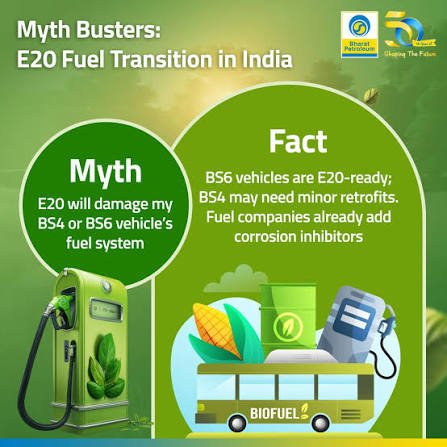
Myth 1: E20 Petrol Completely Damages Engines
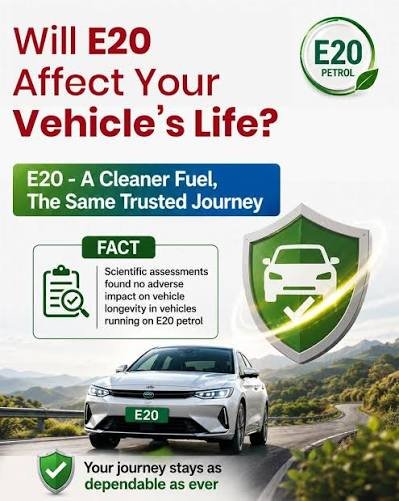
One of the biggest E20 petrol myths is that it directly damages engines. The government has said that since the introduction of E20 petrol, no widespread engine failure or vehicle breakdown attributable to ethanol blending has been reported.
This does not mean every vehicle will behave exactly the same. Some older vehicles may need extra attention, especially for certain rubber parts. NDTV reported that studies cited by the ministry found no major drivability or compatibility problems with metal and plastic components, though some rubber parts in older vehicles may require earlier replacement.
So the practical answer is simple. E20 petrol is not proven to be a mass engine-damaging fuel, but older vehicles should be serviced properly and checked through authorized service centres if owners notice performance changes.
Myth 2: E20 Petrol Gives Very Poor Mileage
Many drivers are asking whether E20 petrol reduces mileage. This question is fair because ethanol has different energy properties compared to petrol. Government sources have acknowledged that E20 can cause a marginal reduction in fuel efficiency in some vehicles, especially four-wheelers designed for E10 and calibrated for E20. However, the same official response also said that no major issues were observed in vehicle performance, engine component wear, or engine oil deterioration with E20 fuel.
The ministry has also said that ARAI-led trials covering around 40,000 kilometres in passenger cars and 20,000 kilometres in two-wheelers found no significant adverse impact on drivability or fuel efficiency, with only marginal mileage changes.
In simple words, some users may notice a small mileage difference, but the claim that E20 petrol destroys fuel economy is exaggerated.
Myth 3: Ethanol Production Wastes Too Much Water
Another viral claim says that producing one litre of ethanol consumes 10,000 litres of water. The government has rejected this claim. According to the ministry, ethanol distilleries use around 3 to 5 litres of processed water per litre of ethanol and many are moving towards Zero Liquid Discharge systems that recycle water.
The ministry has also said that surplus rice is used only after food security needs are met, and maize now plays a major role in ethanol supply. Maize generally requires lower irrigation compared with paddy, which makes it an important feedstock in the ethanol blending programme.
This does not mean water management should be ignored. Ethanol production still needs responsible monitoring. But the claim of extreme water wastage is not supported by the official clarification.
Myth 4: E20 Fuel Attracts Ants and Insects
A strange but widely shared claim says that E20 petrol attracts ants because ethanol comes from sugar. This sounds believable at first, but it ignores how fuel-grade ethanol is actually produced.
Fuel-grade ethanol goes through fermentation and distillation, which removes residual sugars. The government also said ethanol used for petrol blending contains denaturants that repel insects, and there is no identifiable attractant in E20 fuel that would cause ants or insects to gather near fuel caps.
So, E20 petrol is not the same as sugar syrup or sugarcane juice. It is an industrial fuel component made under specific quality standards.
Myth 5: E20 Petrol Can Void Insurance or Warranty
Another major fear is that using E20 petrol may void vehicle insurance or warranty. The government has rejected this claim and said stakeholders clarified that such concerns were incorrect.
Still, vehicle owners should follow their vehicle manual and service guidelines. If a vehicle is older or if the owner is unsure about compatibility, the best step is to contact the authorized service centre. Do not rely only on WhatsApp forwards or viral videos for vehicle maintenance decisions.
Myth 6: Sugarcane Juice is Mixed Directly With Petrol
Some videos have claimed that sugarcane juice is directly mixed with petrol. This is misleading. Ethanol used for fuel blending is produced through established industrial processes and must meet strict quality specifications before it is blended with petrol.
The source of ethanol may be sugarcane juice, molasses, broken rice, or maize, but the final ethanol used in fuel is chemically different from the original agricultural feedstock after processing. That is why comparing E20 petrol with raw sugarcane juice is not correct.
Real Benefits of E20 Petrol in India
The biggest benefit of E20 petrol is reduced dependence on imported crude oil. This matters for a country like India because crude oil imports affect the economy, fuel pricing, and energy security.
Another benefit is support for farmers. Ethanol production creates demand for agricultural feedstocks, which can help generate income in rural areas. The government has repeatedly linked ethanol blending with farmer payments and rural economic support.
E20 petrol can also support cleaner mobility. PIB cited a NITI Aayog study saying greenhouse gas emissions from sugarcane-based ethanol and maize-based ethanol are lower than petrol by 65% and 50% respectively.
There is also a performance angle. Ethanol has a higher octane number than petrol, and vehicles tuned for E20 may benefit from better acceleration and ride quality. However, this benefit is more relevant for vehicles designed and calibrated for E20 fuel.
What Vehicle Owners Should Do
Vehicle owners should not panic, but they should stay informed. If your vehicle is new and E20-compatible, normal use should not be a major concern. If your vehicle is older, keep regular service records, follow the manufacturer’s fuel recommendation, and check rubber parts or fuel system components if you notice unusual performance.
It is also wise to monitor real-world mileage over several tank fills instead of judging from one refill. Mileage can change due to traffic, tyre pressure, driving style, AC usage, road condition, and fuel quality. E20 may have some marginal effect, but it is not always the only reason behind mileage changes.
Most importantly, avoid believing every viral claim. E20 petrol is a technical topic, and the right information should come from official sources, automotive experts, service centres, and verified reports.
Conclusion
E20 petrol in India is a major shift in the country’s fuel journey. It has created confusion because people care about their vehicles, mileage, engine life, and fuel cost. That concern is natural. But many viral claims around E20 petrol are either exaggerated or misleading.
The government has clarified that E20 is scientifically monitored, globally accepted, and supported by testing and regulatory safeguards. Some older vehicles may need more attention, and small mileage changes may happen in certain cases, but the larger claim that E20 petrol automatically destroys engines is not supported by the official data available.
For Indian vehicle owners, the best approach is balanced thinking. Do not blindly trust viral fear, but do not ignore practical maintenance either. Understand your vehicle, follow service advice, and stay updated through credible sources. E20 petrol is part of India’s move toward cleaner fuel, lower crude oil dependence, and stronger domestic ethanol production. The conversation should continue, but it should be based on facts, not fear.