



Prambanan Temple is one of the most powerful reminders that culture can travel across oceans and survive for centuries. Located near Yogyakarta in Central Java, Indonesia, this ancient Hindu temple complex is admired for its tall stone towers, detailed carvings, spiritual atmosphere, and deep connection with the Ramayana.
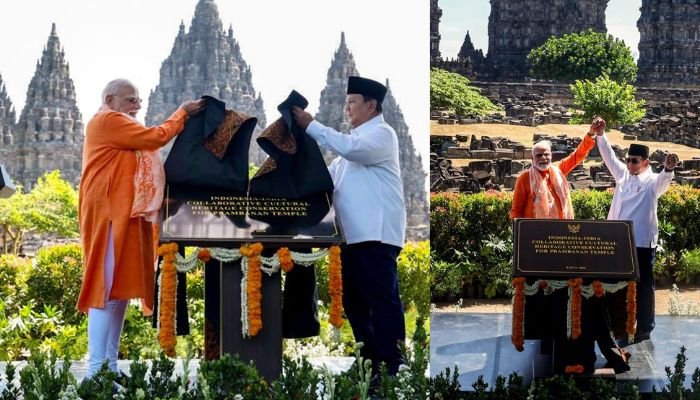
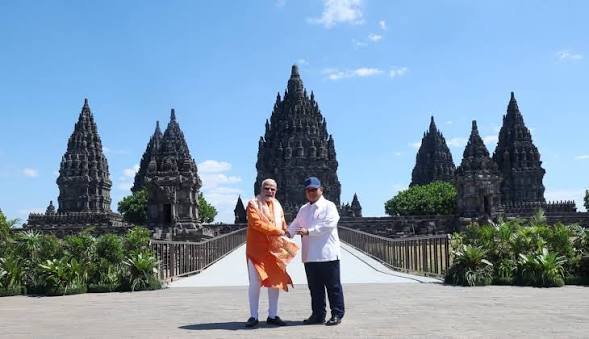
Recently, Prambanan came into the spotlight again when Prime Minister Narendra Modi visited the temple during his Indonesia visit. The visit made many people curious about the story behind this beautiful monument. Why is a Hindu temple located in Indonesia? Who built it? What makes it so important? And why does it still matter today?
The answer lies in Prambanan Temple history, which connects ancient Java, Hindu philosophy, Indian cultural influence, Indonesian art, royal power, folklore, and modern heritage conservation. This temple is not just a tourist spot. It is a living symbol of the old cultural relationship between India and Indonesia.
Where Is Prambanan Temple Located?
Prambanan Temple is located on the plains of Central Java, close to Yogyakarta, one of Indonesia’s most famous cultural cities. Yogyakarta is already known for traditional art, royal history, batik, music, dance, and heritage tourism. Prambanan adds another layer to this cultural richness.
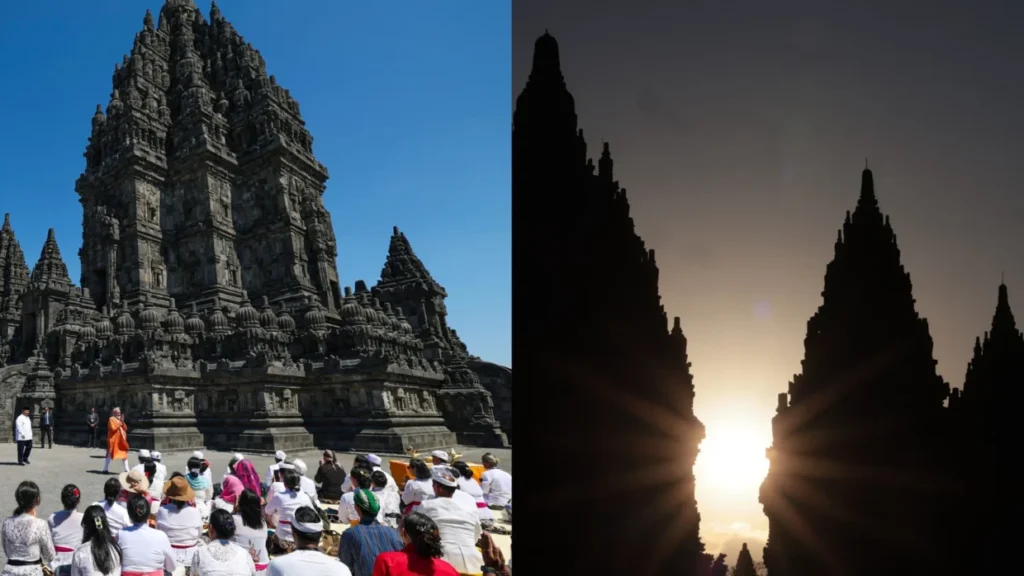
The temple complex stands in an open landscape, where its sharp towers rise dramatically against the sky. For many visitors, the first view of Prambanan feels unforgettable. Unlike some ancient monuments that feel hidden or enclosed, Prambanan feels open, grand, and vertical. Its towers immediately attract attention because they seem to reach upward with great energy.
This location also makes Prambanan a popular stop for travelers who visit Yogyakarta and nearby heritage sites. Many tourists combine Prambanan with Borobudur, another world-famous monument in Indonesia. While Borobudur is strongly linked with Buddhist heritage, Prambanan represents the Hindu legacy of ancient Java.
Why Prambanan Temple Is Important
Prambanan is important because it is the largest Hindu temple complex in Indonesia and one of the finest examples of Hindu architecture in Southeast Asia. It is dedicated to the Trimurti, the three major deities in Hindu tradition: Shiva, Vishnu, and Brahma.
The temple shows how Hindu ideas reached Indonesia through trade, cultural exchange, literature, and royal patronage. Centuries ago, Indian influence spread across Southeast Asia not only through religion but also through language, art, architecture, stories, and political ideas. Prambanan is one of the clearest examples of that shared civilisational connection.
At the same time, Prambanan is not simply a copy of Indian temple architecture. It has a strong Javanese identity. Its design, stonework, layout, and storytelling style reflect local creativity. This is what makes the temple special. It is both Indian in inspiration and Indonesian in expression.
History of Prambanan Temple
Prambanan Temple was built around the 9th to 10th century during the period of ancient Javanese kingdoms. It is commonly linked with the Mataram Kingdom and the Sanjaya dynasty. This was a time when Java saw the rise of grand religious architecture, powerful kingdoms, and rich artistic traditions.
The temple was created as a major Hindu religious complex, with the central shrine dedicated to Lord Shiva. Around it were temples dedicated to Vishnu, Brahma, and their sacred vehicles. The complex originally included many smaller shrines, creating a large and carefully planned sacred space.
Like many ancient monuments, Prambanan went through periods of glory, decline, damage, and restoration. Changes in political power, volcanic activity, earthquakes, and neglect caused parts of the complex to collapse over time. For centuries, many stones remained scattered, and several smaller shrines were left in ruins.
Restoration work later helped bring the main structures back to life. Conservation experts studied the stones, layouts, and archaeological evidence to rebuild important parts of the complex. Even today, Prambanan remains a major heritage conservation site because preserving a monument of this scale requires continuous care.
Architecture and Design of Prambanan Temple
The architecture of Prambanan Temple is one of its biggest attractions. The complex is known for its tall, pointed towers that rise sharply from the ground. These towers create a dramatic skyline and give the temple a strong spiritual presence.
The temple layout follows a carefully planned sacred design. The central area contains the main shrines, while smaller temples were arranged around them. This type of design reflects Hindu cosmology, where temple space is not only built for worship but also represents a symbolic universe.
The tallest temple in the complex is the Shiva temple, which rises to around 47 metres. Its height makes it the dominant structure at Prambanan. The tall design creates a feeling of upward movement, almost as if the temple is guiding the eye from earth toward the divine.
The stone carvings are another important part of the temple’s beauty. The walls are filled with decorative details, divine figures, narrative panels, and symbolic designs. These carvings show the high skill of Javanese artists and stone craftsmen.
The Trimurti Temples of Shiva, Vishnu, and Brahma
At the heart of Prambanan are the three main temples dedicated to Shiva, Vishnu, and Brahma. Together, these three deities form the Trimurti in Hindu tradition.
The Shiva temple is the largest and most important shrine in the complex. It contains chambers with statues connected to Shiva and other important figures. The temple’s size reflects the strong Shaivite influence of the period.
The Vishnu temple and Brahma temple stand near the Shiva temple. These shrines complete the sacred Trimurti arrangement. In front of the main temples are smaller temples dedicated to the vahanas, or divine vehicles, associated with these gods.
This arrangement is important because it shows that Prambanan was not built randomly. Every structure had meaning. The layout, direction, height, and placement of the temples were all part of a larger religious and symbolic plan.
Ramayana Carvings and Cultural Storytelling
One of the most beautiful features of Prambanan Temple is its Ramayana carvings. The temple walls contain reliefs that show episodes from the Ramayana, one of the most important epics in Hindu tradition.
For visitors, walking through these carved galleries feels like reading a story in stone. The scenes show characters, emotions, battles, devotion, and moral lessons. These carvings are not only religious art. They are also visual storytelling from a time when stone, sculpture, and architecture were used to preserve important cultural narratives.
The Ramayana has a special place in Indonesia’s cultural life. In Java and Bali, the epic has been adapted into dance, theatre, shadow puppetry, and music. At Prambanan, the story is still celebrated through the famous Ramayana Ballet, performed with the temple as a dramatic backdrop.
This makes Prambanan more than an archaeological site. It is also connected to living performance traditions. The temple continues to inspire artists, dancers, musicians, travelers, and spiritual seekers.
The Legend of Roro Jonggrang
Prambanan is also linked with the famous Javanese legend of Roro Jonggrang. According to the story, Princess Roro Jonggrang was asked to marry Bandung Bondowoso, a powerful prince or warrior. She did not want to marry him, so she gave him an impossible task: build 1,000 temples in one night.
With supernatural help, he nearly completed the task. To stop him, the princess asked villagers to light fires and make sounds that made it seem like dawn had arrived. The spirits helping him disappeared before the final temple was finished.
When Bandung Bondowoso realized he had been tricked, he became angry and cursed Roro Jonggrang, turning her into stone. Local tradition connects her with the Durga statue inside the Shiva temple.
Historians treat this as folklore rather than recorded history, but the story remains deeply connected with Prambanan’s identity. It gives the monument a human and emotional layer. It also shows how local people used storytelling to explain the mystery and beauty of ancient monuments.
Prambanan as a UNESCO World Heritage Site
Prambanan Temple Compounds were inscribed as a UNESCO World Heritage Site in 1991. UNESCO recognition confirms the site’s global cultural value and helps bring international attention to its preservation.
The UNESCO-listed property includes Prambanan Temple along with nearby temple compounds such as Sewu, Bubrah, and Lumbung. Together, these monuments show the rich religious and architectural traditions that existed in ancient Java.
Prambanan’s UNESCO status is important for tourism, education, and conservation. It encourages responsible travel and reminds visitors that this is not just a photo location. It is a protected heritage site that belongs to world history.
PM Modi’s Visit and India-Indonesia Cultural Connection
PM Modi’s visit to Prambanan Temple brought renewed attention to the ancient links between India and Indonesia. The visit was not only political or diplomatic. It also had cultural and symbolic meaning.
India and Indonesia share centuries-old connections through trade, maritime routes, language, religion, art, and literature. Ancient Indian stories like the Ramayana became part of Indonesian cultural life, especially in Java and Bali. Prambanan stands as a strong example of this shared past.
The visit also highlighted the importance of heritage conservation. Ancient monuments need care, technical knowledge, and international cooperation. When countries work together to protect cultural sites, they are not only preserving stone structures. They are preserving memory, identity, and civilisational friendship.
Why Prambanan Temple Attracts Global Travelers
Prambanan Temple attracts travelers because it offers history, architecture, spirituality, photography, storytelling, and cultural performance in one place. For history lovers, it reveals the Hindu past of Java. For architecture lovers, it offers one of Southeast Asia’s most impressive temple designs. For photographers, it provides dramatic towers, golden-hour views, and beautiful stone details.
Many travelers also visit Prambanan because it feels different from other heritage sites. Its vertical design gives it a majestic appearance. The open-air setting makes the complex feel grand and peaceful at the same time.
The Ramayana Ballet is another major attraction. Watching a traditional performance with the illuminated temple in the background creates a memorable cultural experience. It connects the ancient carvings on the temple walls with living Indonesian art.
Best Things to See at Prambanan Temple
The main Shiva temple is the highlight of the complex because of its size, height, and detailed chambers. Visitors should also see the Vishnu and Brahma temples to understand the full Trimurti layout.
The Ramayana reliefs are another must-see feature. These carvings are among the most meaningful parts of the temple because they show how Indian epic literature became part of Javanese visual culture.
The scattered ruins and smaller shrines around the main temples are also worth noticing. They show the original scale of the complex and remind visitors that Prambanan was once much larger than what appears fully restored today.
For the best visual experience, many travelers prefer visiting during early morning or late afternoon when the light is soft. Evening visits can also be special if combined with the Ramayana Ballet performance.
Conclusion
Prambanan Temple is not only an ancient Hindu temple in Indonesia. It is a symbol of shared history, spiritual imagination, artistic excellence, and cultural connection between India and Indonesia. Its tall towers, Trimurti shrines, Ramayana carvings, and legends make it one of the most fascinating heritage sites in Southeast Asia.
PM Modi’s visit has brought fresh global attention to Prambanan, but the temple’s importance is much older than any modern event. For more than a thousand years, it has stood as a reminder that culture can cross borders, stories can survive through stone, and heritage can connect nations across time.
For travelers, Prambanan is a place to see. For history lovers, it is a place to study. For culture seekers, it is a place to feel the living bond between ancient India and Indonesia.