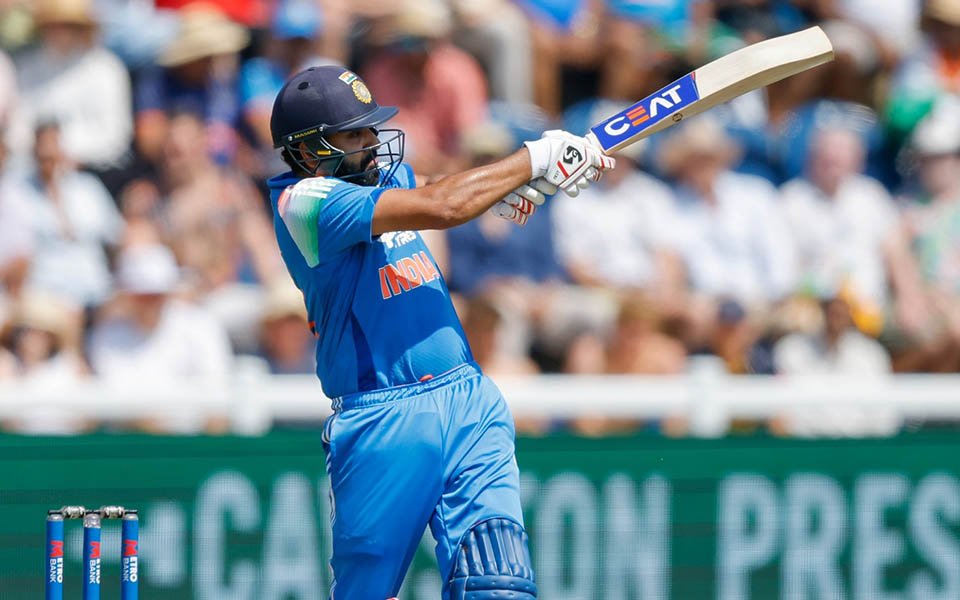



Introduction
The India T20I defeat to England at Trent Bridge has become one of the biggest talking points in cricket. It was not just another loss in a bilateral series. It was a record defeat that forced fans, experts, and former players to ask serious questions about India’s T20 cricket direction.
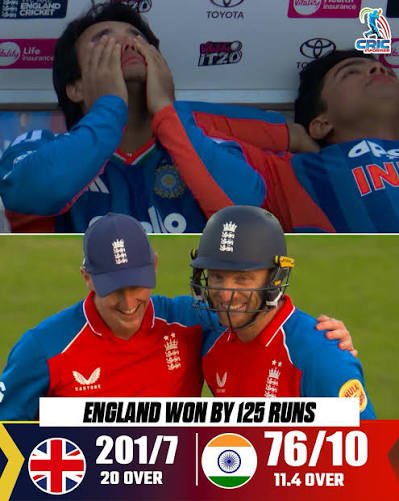
India lost the third T20I against England by 125 runs, after being bowled out for only 76 runs while chasing a target of 202. England had earlier posted 201/7 in 20 overs, with Phil Salt scoring 70 and Sam Curran adding an important unbeaten 41.
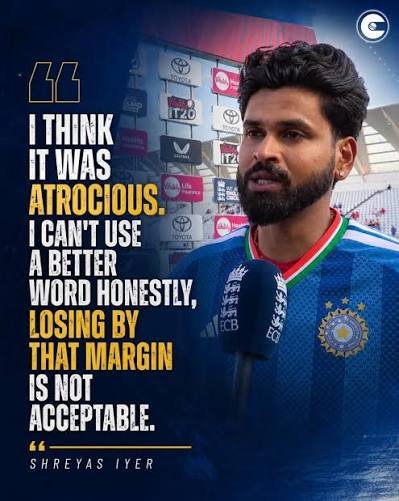
After the match, India captain Shreyas Iyer gave a very honest reaction. He called the performance “atrocious” and said there was no acceptable excuse for such a big defeat. His words became the headline because they reflected what many fans felt while watching India’s innings collapse.
This blog explains what went wrong for India, why England dominated the match, how the powerplay changed everything, and what India must fix before the next T20I challenge.
What Happened in the India vs England 3rd T20I?
The third T20I was played at Trent Bridge, Nottingham, where India won the toss and chose to bowl first. On paper, this looked like a reasonable decision because chasing is often preferred in T20 cricket. However, the match slowly moved away from India’s control.
England started steadily and then accelerated through important contributions from their top and middle order. Phil Salt played the most important innings for England, scoring 70 runs from 44 balls. Jos Buttler added a quick 36, while Sam Curran finished the innings strongly with 41 not out from 24 balls. England ended at 201/7 in 20 overs.
For India, Prince Yadav and Harshit Rana took two wickets each, but the bowling unit could not stop England from crossing 200. The total was not impossible to chase, especially on a ground known for scoring opportunities. But India’s reply turned into a disaster.
India began aggressively, but wickets fell too quickly. The top order collapsed inside the powerplay, and England’s bowlers kept attacking with pace, bounce, and discipline. India were eventually bowled out for 76 in 11.4 overs, giving England a huge 125-run victory.
Why Shreyas Iyer Called the Defeat “Atrocious”
Shreyas Iyer’s post-match reaction was direct and emotional. He did not try to defend the performance. He accepted that the team had played poor cricket and needed to understand its mistakes properly.
His use of the word “atrocious” stood out because captains often use soft language after heavy defeats. But Iyer chose honesty. He said losing by such a big margin was not acceptable and that India needed to go back to the drawing board.
This reaction was important for two reasons. First, it showed accountability. Second, it confirmed that the team itself understood the seriousness of the defeat.
In modern T20 cricket, teams can lose while playing aggressively. But there is a difference between fearless batting and careless batting. India’s innings looked more careless than fearless. The batters kept playing attacking shots even when wickets were falling regularly. There was little sign of rebuilding, rotating strike, or adapting to the match situation.
That is why Iyer’s comment felt accurate. India did not simply lose; India lost control.
India’s Batting Collapse: Where the Match Was Lost
The biggest reason behind India’s defeat was the batting collapse. Chasing 202 required a strong start, but it also required smart decision-making. India got some early boundaries, yet the innings never looked stable.
The chase started with intent, but England quickly found breakthroughs. Abhishek Sharma, Vaibhav Sooryavanshi, Ishan Kishan, Shreyas Iyer, and Axar Patel were all dismissed early. India lost five wickets by the end of the fifth over, leaving the chase almost impossible. Cricbuzz’s scorecard shows India lost wickets at 23, 29, 41, 41, and 52 within the first five overs.
In T20 cricket, the powerplay is important because field restrictions give batters more scoring chances. But when a team loses too many wickets in those six overs, the same phase becomes a trap. India scored quickly at the start, but the wickets destroyed the chase.
The problem was not only that India attacked. The problem was that India attacked without adjusting. A 202-run chase does not demand reckless hitting from every batter. It demands calculated aggression. When one or two wickets fall, the next batter must read the situation. India failed to do that.
This collapse also exposed a mental pressure issue. Once England sensed panic, their bowlers became sharper. Every Indian batter looked under pressure to hit out instead of rebuilding the innings.
England’s Bowling Plan: Archer and Tongue Destroy India’s Chase
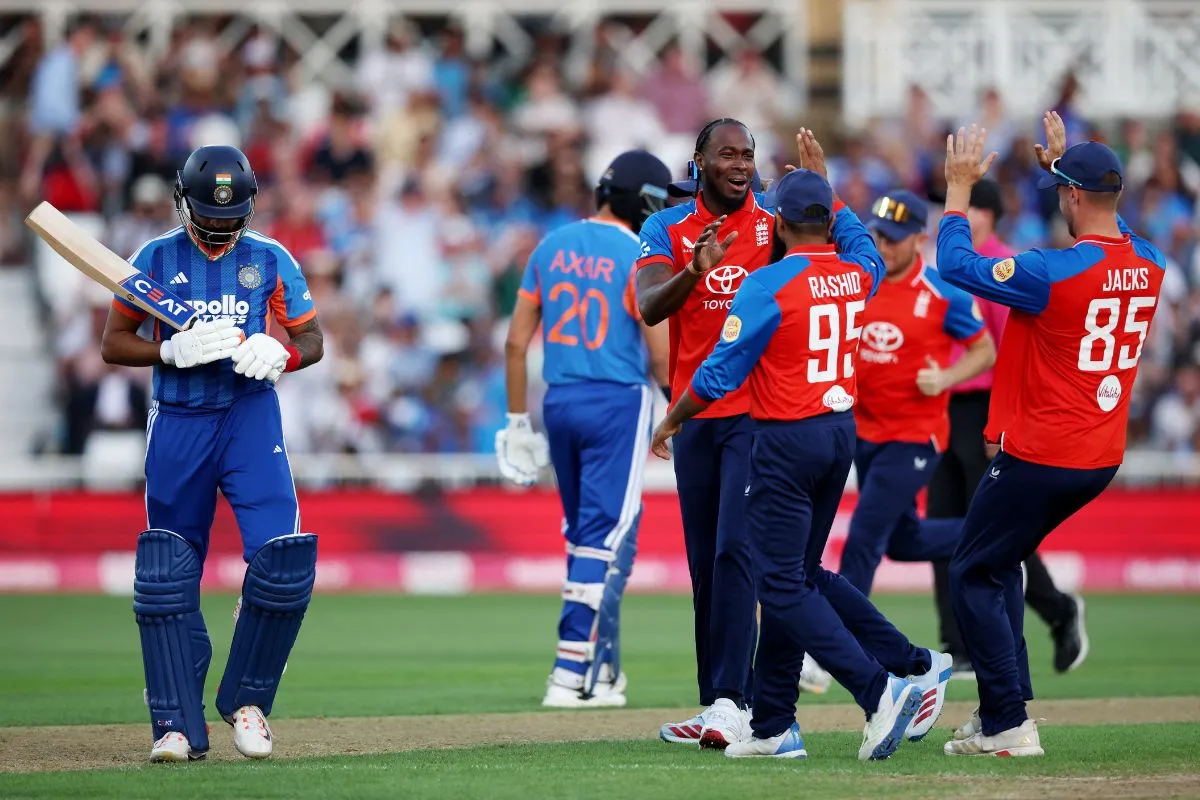
England’s bowling was aggressive, smart, and perfectly suited to the situation. Jofra Archer and Josh Tongue were the standout performers. Archer took 3 wickets for 29 runs, while Tongue finished with 4 wickets for 28 runs. Together, they broke the spine of India’s batting lineup.
Archer used pace and bounce to trouble the Indian batters. Tongue attacked the right lengths and forced mistakes. The pressure created by these two bowlers meant India never got time to settle.
England also used their field placements well. Indian batters continued playing aerial shots, and England had catchers ready in key areas. This made India’s attacking approach look predictable.
Will Jacks and Adil Rashid then completed the job. Jacks dismissed Tilak Varma, while Rashid picked up two wickets to finish the innings. England did not allow India any recovery phase.
This is where England deserve credit. They did not just rely on India’s mistakes. They created those mistakes with sharp bowling, discipline, and clear plans.
Was 202 Really a Chaseable Target?
A target of 202 in T20 cricket is difficult, but it is not impossible. Shreyas Iyer suggested after the match that the pitch did not look like a 200-run surface. That statement gives an important clue about how India viewed the game.
If the surface was not easy, then India needed to chase smartly. A good chase on a slightly tricky pitch requires three things: a stable powerplay, one set batter playing deep, and strong strike rotation in the middle overs. India had none of these.
England’s 201 looked bigger after India’s collapse, but during the innings break, many fans would still have felt India had a chance. India had power hitters, left-right combinations, and enough batting depth. The issue was execution.
The chase was lost because India treated the target like it had to be finished quickly. There was no need to panic in the first six overs. Even if India had scored 50 or 55 with two wickets down, the match would have remained alive. Instead, they reached 54 in the powerplay but lost five wickets.
That number explains the match perfectly. Runs were not the issue in the powerplay. Wickets were.
India’s Powerplay Problem
The powerplay became the turning point of the match. India scored boundaries, but England took wickets almost every over. In a high chase, the first six overs should build a platform. For India, they became a collapse zone.
A good T20 team must understand when to attack and when to absorb pressure. India looked locked into one mode. The batters kept going hard even after early dismissals.
This kind of approach can work on flat pitches when the ball comes nicely onto the bat. But on a surface where bowlers are getting bounce or movement, batters need a second plan. They need to play late, use the gaps, take singles, and force bowlers to change their lengths.
India did not show enough flexibility. This is why Shreyas Iyer’s “drawing board” comment matters. The team must decide whether its T20 identity is fearless cricket or situational cricket. The best teams are not just aggressive. They are aggressive with awareness.
A fearless approach should not mean ignoring the scoreboard. It should mean backing your shots while still respecting the match situation.
Bowling Concerns for India
Although the batting collapse will get most attention, India’s bowling also needs review. England reached 201/7 despite losing wickets at different stages. Phil Salt’s innings gave England momentum, and Sam Curran’s finish pushed the total beyond India’s comfort zone.
India’s bowlers had moments of control, but they could not build pressure for long periods. Prince Yadav was impressive with two wickets, and Harshit Rana also picked up two, but England still scored at more than 10 runs per over.
The concern is not only the number of runs conceded. The concern is the lack of control in important phases. In T20 cricket, one expensive phase can change the match. England found those scoring windows and used them well.
India also need to think about their bowling combinations. The balance between pace, spin, and all-round options must be clearer. If the pitch is not easy for batting, bowlers must keep the total below 180. Once England crossed 200, the pressure moved heavily onto India’s batters.
What This Defeat Means for India’s T20 Future
This defeat will hurt because it came in a format where India are expected to be strong. India have deep talent, explosive batters, experienced all-rounders, and quality bowlers. But talent alone does not win T20 matches. Plans, adaptability, and calm decision-making are just as important.
The result also puts pressure on Shreyas Iyer as captain. Leadership in T20 cricket is not only about field placements and bowling changes. It is also about setting the emotional tone of the team. After such a defeat, the captain must keep the dressing room honest but not broken.
Iyer’s reaction was a good start because he accepted the failure clearly. But now India need action. They must review shot selection, batting roles, bowling plans, and match tempo.
A record defeat can either damage a team or wake it up. For India, this loss should become a turning point. The team has enough quality to bounce back, but only if it learns the right lessons.
Key Lessons India Must Learn
India’s first lesson is that aggression needs control. Modern T20 cricket rewards attacking teams, but blind hitting is not a complete strategy. Batters must know when to take risks and when to rebuild.
The second lesson is that the powerplay cannot be treated the same in every match. If the ball is moving or bouncing, losing fewer wickets is more important than chasing a perfect run rate.
The third lesson is that every batter needs role clarity. In a chase of 202, one batter must aim to bat long. If every batter plays like a finisher, the innings can collapse quickly.
The fourth lesson is that bowling plans need sharper execution. India allowed England to reach 201 even though the pitch may not have been ideal for such a total. Better death bowling and middle-over control could have reduced the target.
The fifth lesson is mental. Big teams must stay calm after early setbacks. India looked rushed, and England used that pressure perfectly.
Conclusion
The India T20I defeat to England at Trent Bridge was one of the most difficult nights for Indian cricket in the shortest format. A 125-run defeat is not just a loss; it is a warning sign. India were bowled out for 76 while chasing 202, and that collapse exposed problems in shot selection, powerplay planning, and pressure handling.
Shreyas Iyer’s honest reaction made sense because there was no way to hide the scale of the defeat. Calling the performance “atrocious” was strong, but it was also realistic.
England deserve full credit for their all-round performance. Phil Salt and Sam Curran gave them a strong total, while Jofra Archer and Josh Tongue destroyed India’s chase with high-quality fast bowling.
For India, the road ahead is clear. They need to stay aggressive, but they also need to become smarter. T20 cricket is not only about power. It is about timing, awareness, partnerships, and pressure control. If India can learn from this defeat, it may still become a painful but useful chapter in their T20 journey.