


Short overview
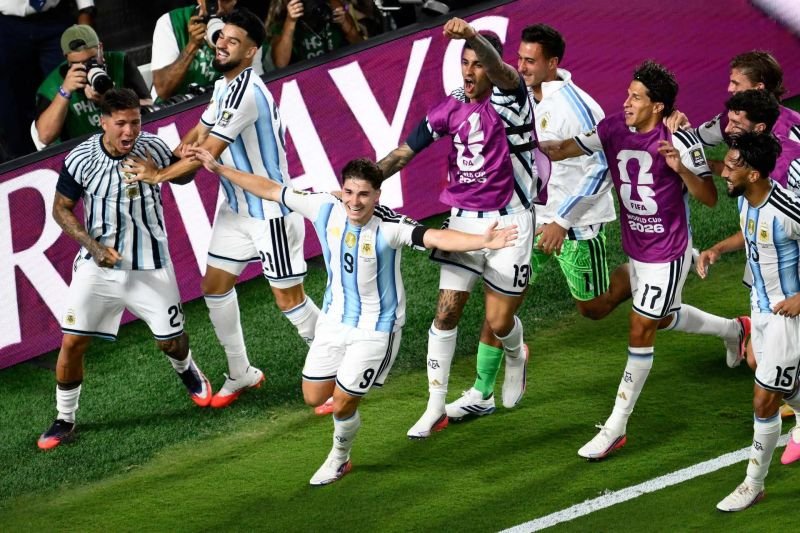
Argentina defeated Switzerland 3-1 after extra time in a tense FIFA World Cup 2026 quarterfinal at Kansas City Stadium. Alexis Mac Allister gave the defending champions an early lead, Dan Ndoye equalized, and Breel Embolo was later sent off after a controversial VAR-assisted decision. Julián Álvarez broke the deadlock with a brilliant strike in the 112th minute before Lautaro Martínez added a late third goal. Argentina will now face England in Atlanta for a place in the final.
Argentina survive a demanding World Cup quarterfinal
The Argentina vs Switzerland World Cup 2026 quarterfinal was not the comfortable evening many supporters expected. Argentina entered as defending champions and favorites, but Switzerland refused to become a quiet opponent. They stayed organized, competed strongly in midfield, and forced Lionel Scaloni’s team to work for every opening.
Argentina eventually won 3-1, but the scoreline does not show how close the contest felt. For long periods, Switzerland limited Argentina’s rhythm. Even after the Swiss were reduced to ten players, Argentina could not find the winning goal in normal time. The breakthrough arrived only in the second half of extra time, when Álvarez produced the moment of quality his team needed.
This was a knockout match that tested patience, concentration, strength, and emotional control. Argentina did not always play their best football, but they stayed calm and found a solution when the pressure was highest.
Mac Allister gives Argentina the perfect start
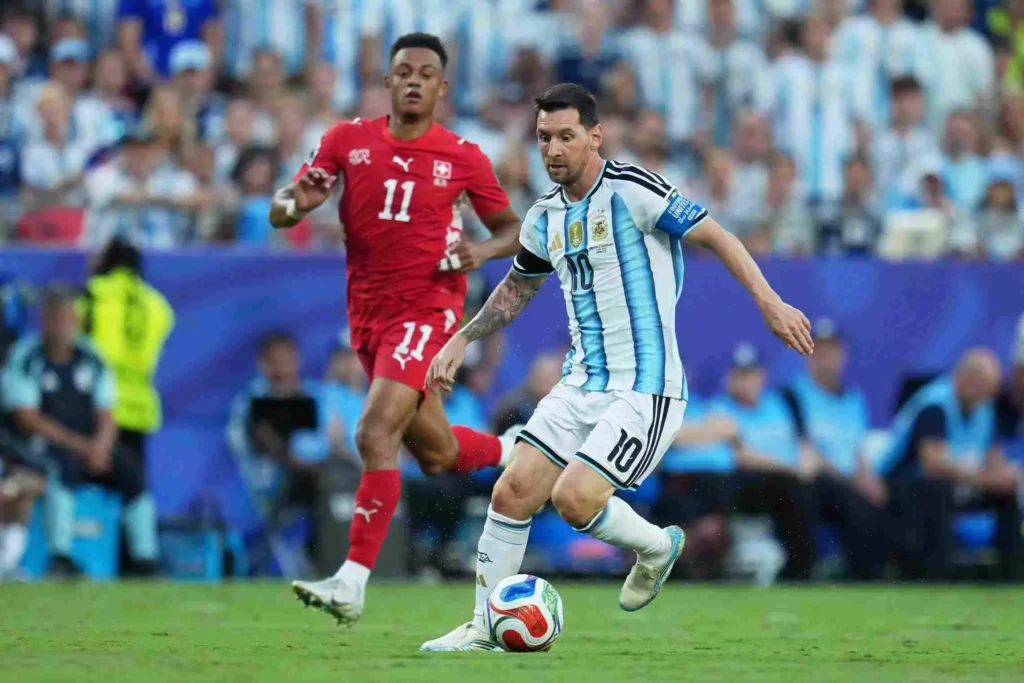
Argentina were rewarded for a bright beginning in the 10th minute. Lionel Messi delivered a cross into the penalty area, and Alexis Mac Allister attacked the ball to head his team in front. Messi created the angle, Mac Allister timed his run, and Switzerland were punished before they could fully settle.
An early goal often allows a favorite to control a knockout game, but Switzerland remained calm. They defended with discipline, avoided chasing the match carelessly, and waited for opportunities to move forward.
The opener also showed Argentina’s variety. Mac Allister is valued for his passing and intelligence, yet his movement into the box gave the attack another option. It also proved that Messi does not need to score to shape a major game. One accurate delivery created the first turning point.
Switzerland respond with courage
Switzerland equalized in the 67th minute when Dan Ndoye finished from close range. The goal was deserved because the Swiss had remained competitive and refused to disappear after falling behind. Their physical approach made several duels difficult for Argentina, something Scaloni later acknowledged.
At 1-1, the pressure shifted. Argentina were no longer protecting a lead and had to attack a team growing in confidence. Switzerland could sense that the champions were vulnerable.
The equalizer also exposed a concern for Argentina. They had possession and attacking talent, but they were not consistently turning control into clear chances. Against a stronger semifinal opponent, that lack of efficiency could become costly.
The Breel Embolo red card changes the contest
The most debated moment arrived in the 72nd minute. Breel Embolo received a second yellow card for simulation after a VAR review connected to a possible case of mistaken identity. Leandro Paredes had initially been booked, but the referee reviewed the incident and changed the decision, leading to Embolo’s dismissal. Switzerland strongly questioned the call.
The red card gave Argentina a major advantage, but it did not immediately decide the match. Switzerland dropped deeper, protected the central areas, and forced Argentina to attack a compact shape. Argentina pushed forward but could not score before the end of normal time.
That period showed both Argentina’s strength and weakness. They had the depth to keep applying pressure, but some attacks became predictable. Against a deep defense, possession must be combined with quicker movement, changing angles, and a willingness to shoot.
Julián Álvarez delivers in extra time
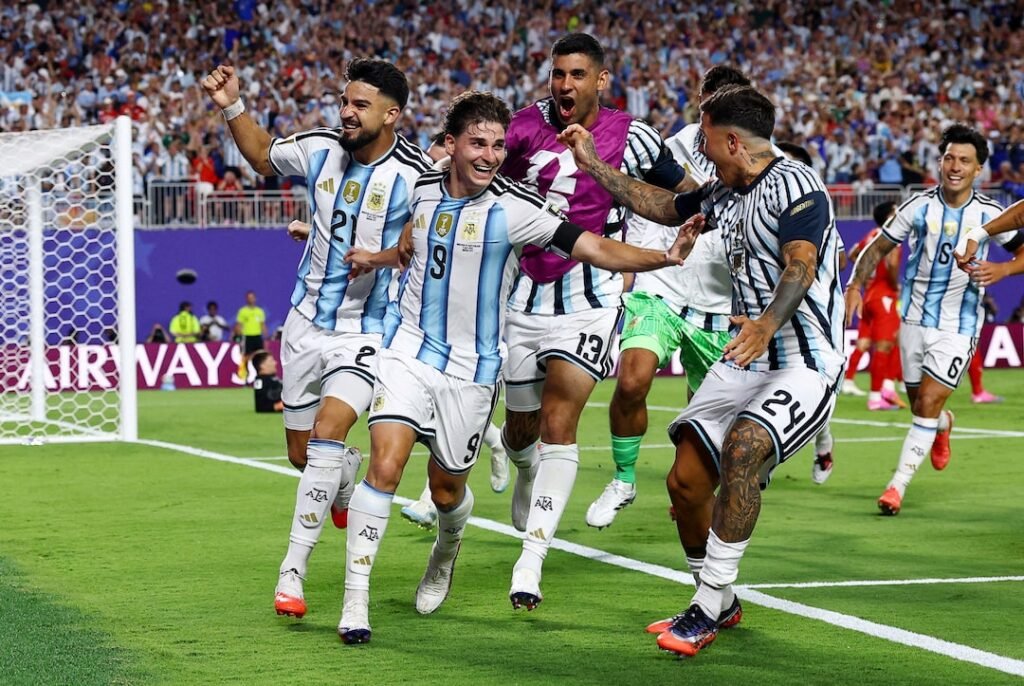
The decisive moment came in the 112th minute. Julián Álvarez struck a powerful long-range effort into the top-right corner. It was the type of goal that can define a World Cup campaign: technically excellent, perfectly timed, and delivered when tension had taken control of the match.
Once Switzerland fell behind, they had to move forward, leaving spaces for Argentina to counterattack. Lautaro Martínez took advantage late in extra time. Thiago Almada carried the move forward, and after his effort broke kindly, Martínez finished to make it 3-1.
The contributions from Álvarez, Martínez, Almada, and José López were encouraging for Scaloni. Knockout tournaments are rarely won by one star alone. Teams need substitutes and supporting players who can enter a difficult game and change its direction.
Lionel Messi’s influence remains important
Messi did not score, but his influence was clear. His cross created Mac Allister’s opener, his movement attracted defenders, and he nearly scored during a one-on-one chance. At 39, he may not control every minute in the same way he once did, but he still has the vision to create danger with one touch or pass.
That matters before the Argentina vs England semifinal. England will prepare carefully for Messi, but focusing only on him would be risky. Argentina can also threaten through Álvarez, Martínez, Mac Allister, Almada, and runners arriving from deeper positions.
Messi’s experience also helps the team remain calm. Argentina needed that calm when the game stayed level despite their extra player.
What Argentina must improve before facing England
Argentina can celebrate, but the Switzerland match offered warnings. They must increase the speed of their passing against compact defenses. Slow possession gives opponents time to reset, while quicker combinations can open gaps between the lines.
They must also manage physical duels better. Switzerland disrupted their rhythm by competing aggressively and making the match uncomfortable. England have the athleticism and midfield quality to create similar problems.
Argentina also need to be more clinical. They had chances to settle the quarterfinal earlier but allowed it to reach extra time. In a semifinal, one missed opportunity can decide the tournament.
There are still strong reasons for confidence. Argentina showed patience, used their bench well, and found goals from different players. Scaloni’s group also understands knockout pressure after winning in 2022. Argentina are now two victories away from defending their crown, something only Italy and Brazil have achieved in men’s World Cup history.
Why Switzerland can leave with pride
Switzerland’s tournament ended painfully, but their performance deserved respect. They recovered from an early goal, equalized against the defending champions, and remained organized after losing a player. Even with ten men, they forced Argentina into extra time and came close to creating a major surprise.
The red-card debate will continue, but it should not erase the quality of the Swiss display. Murat Yakin’s team showed courage, structure, and belief. They made Argentina uncomfortable and proved that disciplined teamwork can challenge even the most talented squads.
Argentina vs England semifinal preview
Argentina will face England at Atlanta Stadium on Wednesday, July 15, 2026. Kickoff is scheduled for 8:00 p.m. BST, or 12:30 a.m. IST on Thursday, July 16. England reached the semifinal by defeating Norway 2-1 after extra time, with Jude Bellingham scoring both goals.
The semifinal brings together two teams with elite talent and major expectations. Argentina have the experience of winning the previous World Cup, while England have shown resilience in difficult knockout matches. Both sides also arrive after playing extra time in their quarterfinals, so recovery and squad management could matter.
The midfield battle may decide the game. Argentina will want Mac Allister and their central players to control possession and connect with Messi. England will look to use Bellingham’s power, movement, and ability to arrive in scoring positions. Wide areas will also be important because both teams can attack quickly when space appears.
The occasion carries history. Argentina and England have shared famous World Cup meetings, and this will be their first senior meeting since 2005. Scaloni has tried to reduce the emotional noise by describing it simply as a football match against a strong opponent. The team that handles the occasion best will have a better chance of reaching the final.
Conclusion
The Argentina vs Switzerland World Cup 2026 quarterfinal delivered tension, controversy, quality, and late drama. Argentina started quickly through Mac Allister, Switzerland responded through Ndoye, and Embolo’s dismissal changed the balance without immediately ending the contest. Álvarez finally decided it with an outstanding extra-time strike before Martínez added the third goal.
Argentina are through, but improvement is necessary. England will offer greater attacking power, physical strength, and midfield danger. Even so, Argentina have experience, depth, and players who continue to find answers under pressure.
The next challenge is clear: one more demanding night in Atlanta, with a place in the World Cup final waiting for the winner.