



Introduction
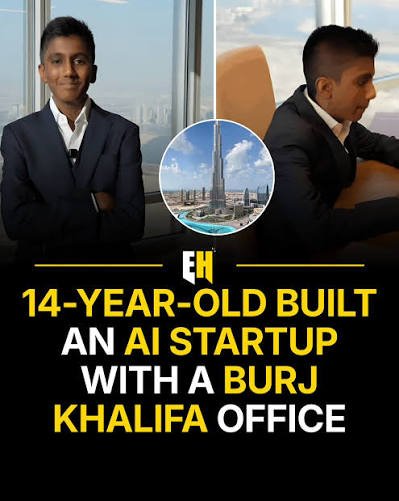
In today’s fast-changing world, age is no longer the only measure of experience, talent, or ambition. Some people spend years waiting for the right time to start something meaningful, while others begin early with curiosity, courage, and consistent action. Jainam Jain belongs to the second group. At just 14 years old, this Indian-origin teenager has attracted attention for founding Mengo Engine, an artificial intelligence startup in Dubai.
His story became widely discussed because his company operates from an office in the Burj Khalifa, the world-famous skyscraper in Dubai. But the real reason people are talking about Jainam is not only the location of his office. It is the mindset behind his journey. While many teenagers are still exploring their interests, Jainam has already stepped into the world of artificial intelligence, business automation, and entrepreneurship. According to NDTV, Mengo Engine is designed to help businesses automate tasks such as marketing, customer communication, sales support, and content creation.
This makes his journey more than a viral success story. It is a useful example for students, parents, startup founders, and young learners who want to understand how education, technology, and practical exposure can work together.
Who Is Jainam Jain?
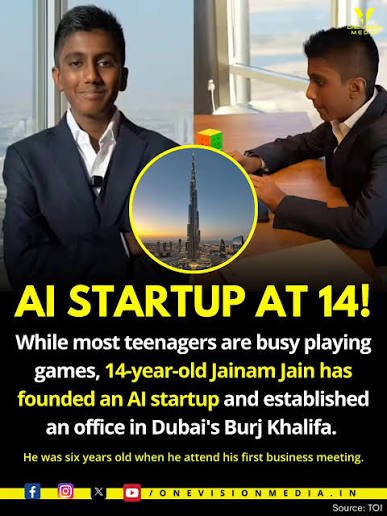
Jainam Jain is a 14-year-old Indian-origin entrepreneur and the founder of Mengo Engine. He has been described in media reports as one of the youngest AI startup founders in Dubai. His journey has gained attention because he entered the world of artificial intelligence at an age when most students are usually focused only on school exams and hobbies.
What makes Jainam’s story interesting is that he did not wait for adulthood to begin learning about business. His interest reportedly started when he was only six years old, after attending a business meeting with his father. That experience gave him early exposure to how entrepreneurs think, communicate, solve problems, and build ideas into real companies. NDTV reported that Jainam continued learning through business events, meetings with entrepreneurs, and real-world experiences instead of depending only on classroom learning.
This shows that his growth was not sudden. It was built over time through curiosity, observation, and consistent learning. Jainam’s story reminds us that successful entrepreneurship is rarely about one lucky moment. It is usually the result of many small habits, repeated learning, and a strong willingness to try.
What Is Mengo Engine?
Mengo Engine is Jainam Jain’s AI startup. The platform is designed to support businesses by automating important daily tasks. According to NDTV and India Today, the startup focuses on areas such as marketing, customer engagement, sales support, lead management, newsletters, and content creation.

This is important because many small and growing businesses struggle with time-consuming tasks. They need to communicate with customers, create content, follow leads, manage marketing campaigns, and support sales teams. Artificial intelligence tools can help reduce manual work and make these processes faster.
Mengo Engine appears to be built around this same idea. It aims to act like a smart business assistant that helps companies save time and improve productivity. In a world where AI tools are becoming part of everyday work, a platform like this can be useful for startups, service businesses, creators, agencies, and growing companies.
The larger lesson here is that Jainam did not simply create an AI project for attention. He entered a practical problem area. Businesses want automation. They want faster communication. They want better marketing systems. They want tools that can help them grow with less manual effort. This is why the idea behind Mengo Engine fits into a high-demand market.
Why His Burj Khalifa Office Made Headlines
The Burj Khalifa is one of the most iconic buildings in the world. Having an office there naturally attracts attention, especially when the founder is only 14 years old. Reports from NDTV, India Today, and NewsBytes mention that Jainam’s AI startup is linked with an office in Dubai’s Burj Khalifa, with NewsBytes reporting the office location as the 141st floor.
However, the building should not be the only focus of the story. The Burj Khalifa office is a symbol. It represents ambition, visibility, and global thinking. For a young founder, working from such a business location sends a message that big dreams can begin early when supported by discipline and action.
Still, what matters most is not the luxury or prestige of the address. The real value lies in the idea, the execution, and the learning process behind the startup. Many people may get inspired by the Burj Khalifa angle, but the deeper inspiration is Jainam’s ability to combine technology, business thinking, and personal discipline at such a young age.
How His Entrepreneurial Journey Started Early
Jainam’s entrepreneurial journey reportedly began at the age of six, when he attended his first business meeting with his father. That moment exposed him to the world of business conversations and problem-solving. Over time, he started attending more events, meeting professionals, and learning through real-life experiences.
This part of the story is very important for young readers. Many students think learning only happens inside classrooms. Classrooms are important, but practical exposure also plays a powerful role. When children observe how people build businesses, solve customer problems, create products, and communicate ideas, they begin to understand the real world earlier.
Jainam’s journey suggests that early exposure can build confidence. It can help young learners ask better questions, develop better communication skills, and understand what problems people actually face. This kind of learning can be especially valuable in fields like artificial intelligence, where technology changes quickly and practical use cases matter a lot.
The Role of Accelerated Learning
One of the most discussed parts of Jainam Jain’s story is his education path. NDTV reported that he completed the IGCSE Class 10 curriculum at the age of 13 in just 105 days. He followed an accelerated learning approach so he could spend more time building his company and working on new ideas.
This does not mean every student should rush through school. Every learner is different. Some students need more time, while others can move faster in certain subjects. The important lesson is not speed alone. The lesson is focus. Jainam created a learning path that matched his goals.
Accelerated learning works only when there is discipline, structure, and purpose behind it. Without focus, rushing can create pressure. But with proper planning, it can help students make time for skills, projects, internships, startup ideas, and creative work.
In Jainam’s case, education and entrepreneurship were not treated as completely separate paths. He used learning as a foundation and practical experience as a growth engine. That combination is powerful for the future because modern careers are no longer built only on certificates. They are built on skills, execution, adaptability, and real problem-solving ability.
Jainam Jain’s Achievements Beyond His Startup
Jainam Jain’s work is not limited to Mengo Engine. NDTV reported that he has delivered a TEDx talk, holds two patents, has authored a book, and has built a YouTube channel with more than 145,000 subscribers. The report also mentions that he began taking 50-day personal challenges from the age of 10, including reading 50 books, attending 50 business events, and travelling thousands of kilometres across India to meet entrepreneurs and professionals.
These achievements show one important thing: Jainam built a habit of learning in public and challenging himself. For young people, this is a strong lesson. Big achievements usually come from repeated small actions. Reading one book may not change everything. Attending one event may not create a company. Creating one video may not build a personal brand. But doing these things consistently can change a person’s confidence, knowledge, and network over time.
His YouTube journey also matters because it shows the role of communication. In today’s digital world, founders need more than technical skills. They also need storytelling, public speaking, content creation, and community-building skills. Jainam’s background as a creator likely helped him express ideas better and connect with a wider audience.
Why This Story Matters for Young Entrepreneurs
Jainam Jain’s AI startup story matters because it challenges the old belief that young people must wait for the “perfect age” to start. Of course, not every teenager needs to build a startup. But every young person can start learning, experimenting, and building skills early.
Artificial intelligence is creating new opportunities for students and first-time entrepreneurs. A young person with a laptop, internet access, curiosity, and discipline can now learn coding, design, marketing, automation, data, and business strategy much earlier than previous generations could. This does not make success easy, but it makes access to learning more open.
Jainam’s story also shows that entrepreneurship is not only about money. It is about identifying problems and building solutions. Mengo Engine focuses on automation because businesses need better ways to manage marketing, communication, and sales. That problem-first approach is what makes a startup meaningful.
For young founders, the message is clear. Do not start with the question, “How can I become famous?” Start with the question, “What problem can I solve better?” Fame may come later, but value should come first.
Lessons Students Can Learn from Jainam Jain
Students can learn many practical lessons from Jainam’s journey. The first lesson is that curiosity is a serious advantage. When students stay curious, they do not limit themselves to textbooks. They ask questions, explore tools, meet people, and try small projects.
The second lesson is that consistency beats excitement. Many people feel excited about AI, startups, or content creation for a few days. But only consistent learners continue after the excitement fades. Jainam’s 50-day challenges show how repeated effort can build long-term growth.
The third lesson is that real-world exposure matters. Students should try to learn from interviews, business events, online courses, internships, competitions, and conversations with experienced people. Even small exposure can open new thinking.
The fourth lesson is that communication is important. A founder must explain ideas clearly. Whether it is a pitch, a video, a blog, a presentation, or a customer conversation, communication helps turn an idea into trust.
The fifth lesson is that artificial intelligence should be used to solve real problems. AI is not just a trend. It becomes powerful when it helps people save time, reduce mistakes, improve customer service, or create better business systems.
What Parents Can Learn from His Journey
Parents can also learn from Jainam Jain’s story. Every child may not become a startup founder, and that should not be the pressure. The real takeaway is to support curiosity. When a child shows interest in technology, business, design, science, writing, or public speaking, parents can help by giving guidance, resources, and exposure.
Support does not mean forcing children into competition. It means helping them explore safely and meaningfully. Parents can encourage reading, project-based learning, workshops, coding basics, communication skills, and healthy discussions about real-world problems.
Jainam’s journey also shows that learning can happen outside a fixed path. Traditional education is still valuable, but children today also need practical skills. They need to understand technology, creativity, teamwork, and problem-solving. Parents who balance academic learning with skill-based exposure can help children become more confident and future-ready.
The Bigger Future of AI Startups
The rise of AI startups is not just a passing trend. Businesses across the world are looking for smarter tools to improve productivity. AI can help with customer support, content writing, sales automation, data analysis, design, education, and many other tasks.
This creates opportunities for young entrepreneurs who understand both technology and business needs. A founder does not need to build the most complicated AI system in the world. Sometimes, a simple tool that solves a clear business problem can create strong value.
Mengo Engine’s focus on automation fits this larger shift. Many companies want AI systems that are easy to use and directly connected to revenue, customer communication, or marketing performance. This is why AI business automation is becoming a high-intent area for startups, agencies, and digital service providers.
For students and young builders, this is the right time to learn how AI works, where it can be applied, and how it can be used responsibly. The future will reward people who can combine technical knowledge with empathy, creativity, and business understanding.
Conclusion
Jainam Jain’s AI startup journey is inspiring because it brings together ambition, early learning, technology, and discipline. At just 14, he has gained attention for founding Mengo Engine, an AI platform connected with business automation, and for operating from Dubai’s Burj Khalifa. But beyond the headlines, his story carries a deeper message.
Success is not only about age. It is about curiosity, consistency, exposure, and action. Jainam’s journey shows that young people can think big when they are encouraged to learn beyond textbooks and solve real problems. His story also reminds parents, students, and entrepreneurs that the future belongs to those who keep learning and adapting.
For anyone interested in artificial intelligence, startups, or young entrepreneurship, Jainam Jain’s story is a powerful example of what can happen when learning starts early and ambition is supported by action. The Burj Khalifa office may have made the news, but the real headline is the mindset behind the achievement.